Cart
0

Food is a great source of strength, love and comfort. Yet, in today’s world, the very thing meant to nourish us often becomes the reason for illness. Some fruit, milk and sweets on the market may be treated, diluted or artificially coloured, so many buyers prefer known sources. It is no surprise that, despite being more health conscious than ever, some people find it hard to know where their food comes from. This silent crisis has made food safety one of the biggest concerns of our times.
Quick answer: Foods from Bengal's farms include original cow ghee, aam kasundi, kul achar and tentul achar pickles, aam gur and raw Sundarbans honey. Each is tied to family memories and Bengali food heritage, and to the idea of food going from farm to plate.
Amid this chaos, a quiet shift is happening. More and more people are turning towards preservative-free living—choosing chemical-free vegetables, fruits, and grains grown with care. Pure food isn’t just about taste, though it is often richer and fresher; it’s about trust. It carries a sense of safety, knowing it hasn’t been tampered with or forced to ripen unnaturally. Beyond health benefits, additive-free practices also support sustainable farming, showing us that what’s good for our bodies can also be good for the earth.
What does farm to plate mean?
And then comes the idea of “farm to plate”—a simple yet powerful concept. Imagine plucking a tomato straight from the farm and slicing it into your salad the same day. Or pouring milk that hasn’t travelled through countless middlemen but has come directly from the farmer’s hands to your home. This freshness isn’t just about flavour; it’s about preserving nutrients, avoiding preservatives, and creating a bond of trust between farmers and consumers. Farm-to-plate is more than a practice—it’s a return to honesty in food.
What is original cow ghee?
Of course, food is not only about health; it’s also about heritage. Some flavours carry with them entire worlds of memory. Take original cow ghee, for instance. Its golden shine and rich fragrance often remind us of childhood meals, when mothers or grandmothers would lovingly pour a spoonful over hot rice or smear it onto freshly made rotis. It wasn’t only about taste; it was about care, nourishment, and the feeling of being looked after. Even today, that first bite of rice glistening with ghee feels like a warm hug on a difficult day. You can find this original cow ghee at The Bengal Store, made from cow milk procured directly from farmers.
What is aam kasundi?
Then there is aam kasundi—the fiery, mustardy delight that wakes up the senses. A simple plate of rice and dal can suddenly transform into a grand meal with just a spoonful of it. Many of us remember watching jars of kasundi being prepared in summer, mangoes sliced with precision, mustard seeds ground with patience, and the mixture left to ripen under the sun. Its sharp flavour is not just food—it’s an emotion that connects us to our roots.
How aam kasundi is prepared, as described in this article
- Slice the mangoes.
- Grind the mustard seeds.
- Leave the mixture to ripen under the sun.
Which pickles does the article describe?
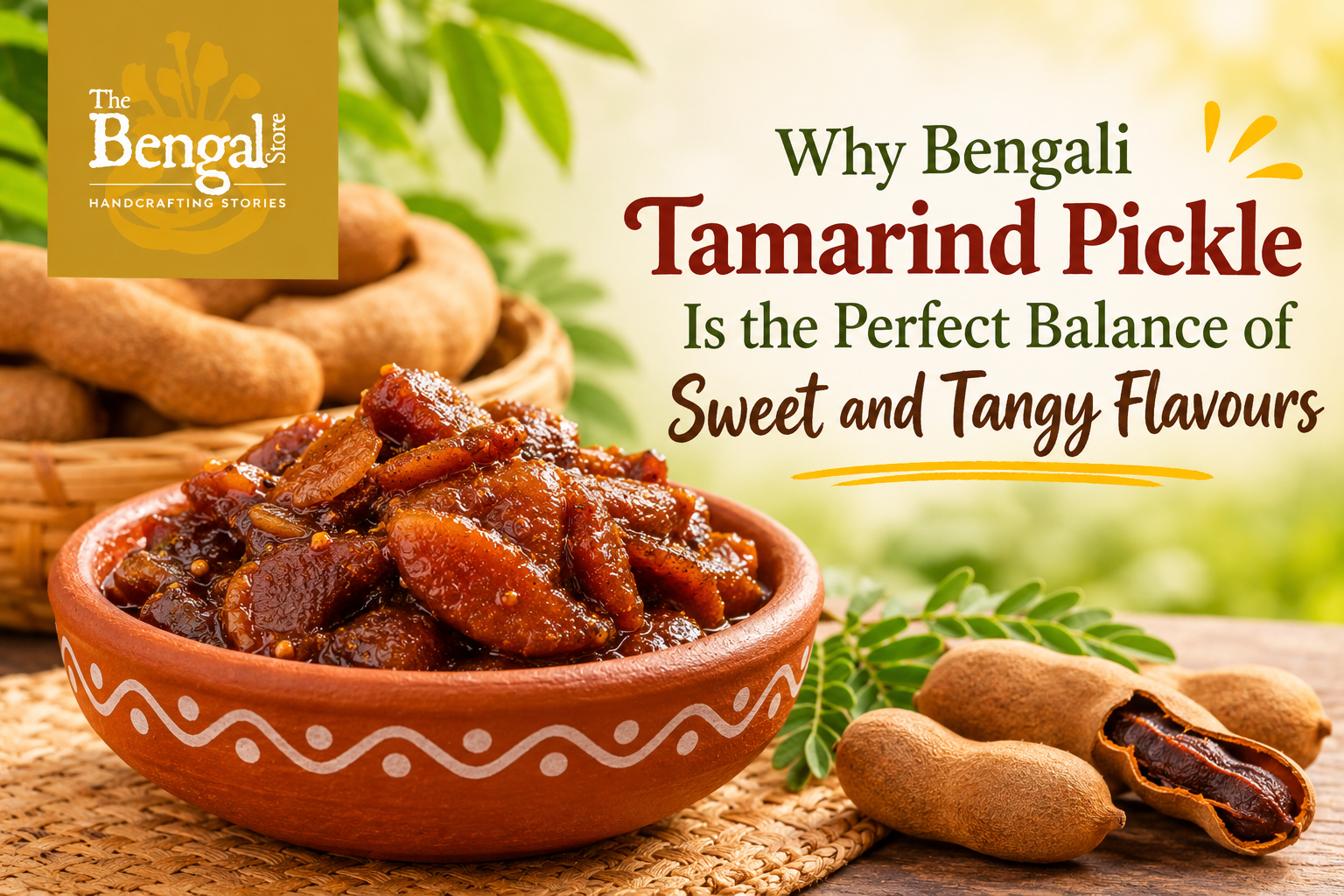
Pickles like kul achar (jujube pickle) and tentul achar bring another wave of nostalgia. Who hasn’t stolen a bite straight from the jar when no one was looking? The tangy sweetness of kul achar or the lip-smacking sourness of tentul achar (tamarind pickle) reminds us of afternoons when the jars were left on rooftops to mature, while children impatiently waited for the day they would finally be opened. These pickles were more than condiments—they were part of family rituals, carrying with them the laughter of cousins, the scoldings of elders, and the taste of patience.
What is aam gur?
And then comes aam gur, the seasonal sweetness that feels like a winter celebration. Made from ripe mango pulp and jaggery, aam gur was always something special, often cut into small pieces and stored carefully. Its taste brings back the joy of sharing—a piece passed around among siblings, or gifted to guests as a token of love. Even today, its chewy sweetness carries a warmth that many factory made sweets do not have.
What is raw unprocessed honey?
For those who love natural products, there is also raw, unprocessed honey. The golden liquid is raw and unprocessed. You can try The Bengal Store's Sundarbans Honey, which is a raw honey from the Sundarbans.
| Item | What the article says |
|---|---|
| Original cow ghee | Golden shine and rich fragrance; poured over hot rice or spread on freshly made rotis |
| Aam kasundi | A mustardy condiment made from sliced mangoes and ground mustard seeds, left to ripen under the sun |
| Kul achar | Jujube pickle with a tangy sweetness |
| Tentul achar | Tamarind pickle with a sour taste |
| Aam gur | Made from ripe mango pulp and jaggery, cut into small pieces |
| Raw unprocessed honey | The Bengal Store's Sundarbans Honey |
Foods described in this article
Perhaps that’s the balance we need today. On one hand, we fight adulteration with natural living and farm-to-plate practices. On the other hand, we hold onto the cultural treasures that remind us of where we come from. Together, they create not just meals, but stories—stories of health, heritage, and harmony with nature.
If you wish to buy organic food online, you can find ghee and raw unprocessed honey at The Bengal Store. You can also explore items like Bengal Store Mango Pickle and Bengal Store Aam Murabba (a sweet fruit preserve), which bring tradition directly to your table.
In the end, it’s simple: what we put on our plate shapes our body, mind, and memories. And when food is pure, honest, and touched with tradition, it becomes more than just nourishment—it becomes life itself.
Key terms
- Kul achar
- Jujube pickle
- Tentul achar
- Tamarind pickle
- Aam murabba
- A sweet fruit preserve