Cart
0
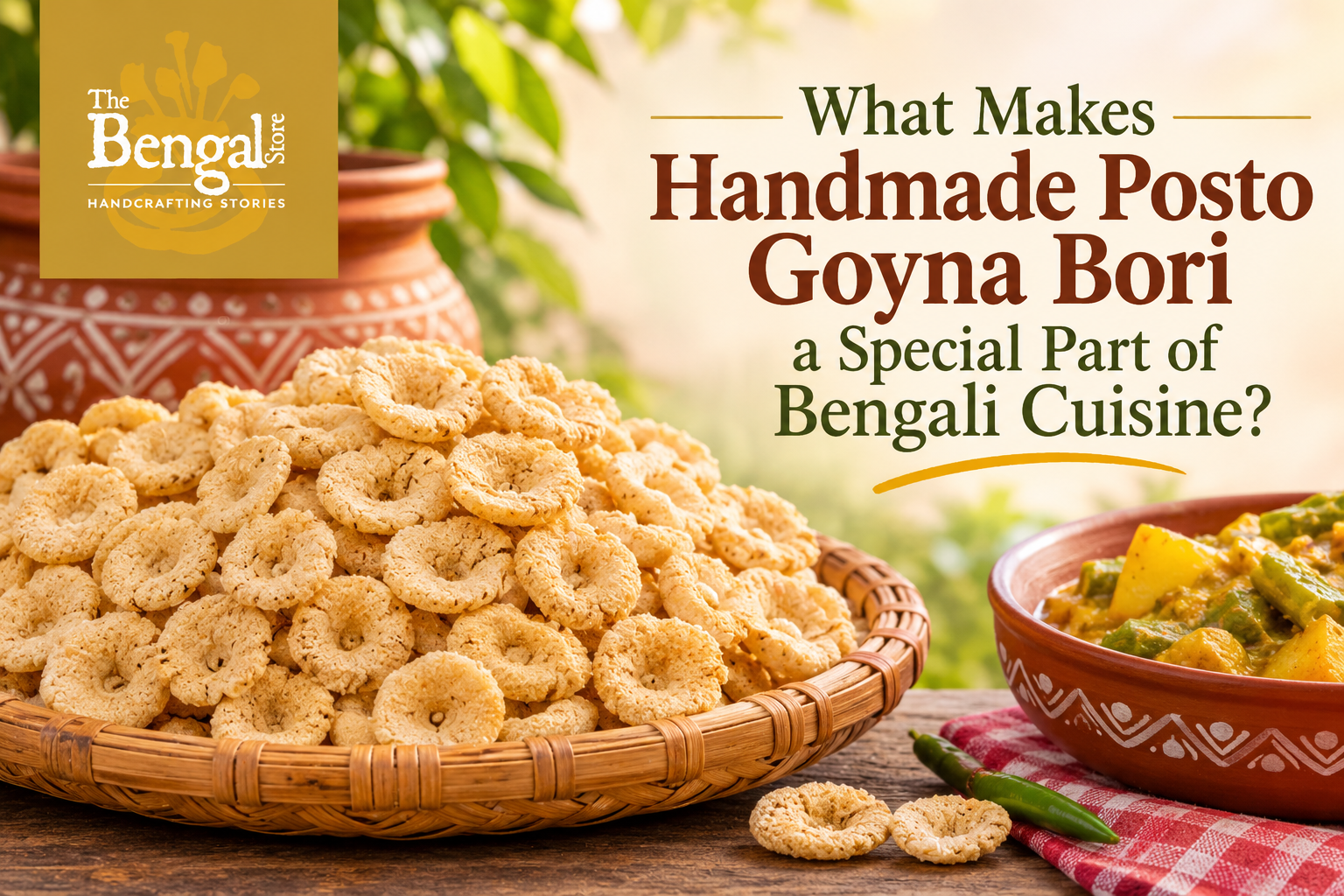
Handmade posto goyna bori is a sun-dried lentil dumpling from Purba Medinipur in West Bengal, shaped by hand into fine, jewellery-like patterns on a bed of poppy seeds (posto). “Goyna” means jewellery in Bengali, and one look explains the name: each piece looks like a delicate brooch or pendant. Once fried, it becomes a light, crisp bite served with meals or with tea. Few foods carry this much skill, history and care in something so small.
|
KEY TAKEAWAYS • Goyna bori is made from a lentil paste shaped into decorative patterns and dried in the sun. • It is linked most closely with Purba Medinipur, where women have made it for generations, mainly in winter. • Poppy seeds stop the soft paste from sticking and add a mild, nutty crunch. • Rabindranath Tagore admired goyna bori as a folk art, and in 2016 a geographical indication (GI) application was filed for it. • It is usually fried until lightly golden and served as a crisp side or snack. |
What is goyna bori?
Bori are small sun-dried lentil drops that Bengali cooks have kept in their pantry for generations. The everyday kind are plain little cones, added to vegetable dishes and light curries. Goyna bori is the decorative, celebratory version. The same idea, a lentil paste dried in the sun, is turned into lace-like designs: flowers, paisleys, shells, peacocks and butterflies. It is also called gohona bori or naksha bori, and the posto version is made on a layer of poppy seeds.
Where Bengali goyna bori comes from
Bengali goyna bori is most closely tied to Purba Medinipur (East Midnapore), especially the area around Tamluk. Its wider fame owes a lot to Rabindranath Tagore. In 1930, a student at Santiniketan, Seba Maiti, gave him goyna bori made by her mother and grandmother. Tagore saw it as art rather than just food. He arranged for the pieces to be photographed for Santiniketan’s art collection, and the artist Nandalal Bose called it a jewel from the Bengali mother’s jewellery box.
That recognition has continued. Goyna bori has been shown at exhibitions and food festivals, and in 2016 IIT Kharagpur helped file an application for a geographical indication (GI) tag. Still, only a small number of makers practise the craft regularly today, which is a big part of why each handmade piece feels special.
How handmade goyna bori is made
Making goyna bori takes time and a steady hand, and it has always been a shared activity among women in the household and village. Methods vary from family to family, but the broad steps are similar:
• Soaking and grinding. A lentil, most often biuli (black gram) dal, is soaked and ground into a smooth paste.
• Whisking. The paste is beaten by hand until light and airy, so the dried bori stays crisp rather than hard.
• Shaping. The maker pipes or draws the paste in a thin, continuous line onto a plate or tray, building up a pattern freehand.
• Sun-drying. The pieces are dried in the sun until firm. Winter is the traditional season because the dry, sunny days help the bori dry evenly.
No two pieces come out exactly the same. That small variation is a sign of handmade work, not a flaw.
The role of posto (poppy seeds)
In posto goyna bori, the tray is first covered with poppy seeds and the paste is shaped on top of them. The seeds do two jobs. First, they keep the soft, wet paste from sticking, so the finished design can be lifted off in one piece. Second, they cling to the back of each bori and add a mild, nutty flavour and a light crunch once fried.
Posto itself is deeply loved in Bengali cooking, from aloo posto to posto bata. One historical account links its arrival in the region’s kitchens to colonial-era poppy cultivation, after which the leftover seeds became a cooking ingredient in Midnapore and nearby districts. Today, it is hard to imagine traditional Bengali cuisine without it.
Goyna bori in traditional Bengali cuisine
Goyna bori has long been a food for special occasions. It has been served at festive meals, such as the feast for a son-in-law’s first visit to his in-laws, and it was traditionally counted among the gifts in a bride’s trousseau. Putting it on the table is a way of showing care for a guest. Among Bengali food delicacies, few say “welcome” quite so beautifully.
How to enjoy posto goyna bori at home
Frying it
Goyna bori is usually deep fried. Heat oil in a pan, slide in one piece at a time and fry until lightly golden on both sides. It colours quickly, so keep an eye on it and turn it gently. Lift it out carefully and drain on paper. The pieces are thin and fragile, so handle them gently before and after frying.
Serving it
|
How to serve |
Why it works |
|
As a crisp side with rice and dal |
Adds crunch and a toasty, nutty taste to a simple meal |
|
On a festive or guest thali |
Its looks make the plate feel special |
|
With tea |
A light, savoury snack on its own |
Simple ways to serve fried goyna bori.
Unlike everyday bori, goyna bori is rarely cooked into curries, because that would hide the design. Eat it soon after frying, while it is still crisp.
The Bengal Store’s Handmade Posto Goyna Bori
If you would like to try it at home, The Bengal Store’s Handmade Posto Goyna Bori comes as a pack of five handmade pieces made on a poppy seed base. The store also offers Shoojir Goyna Bori, another handmade variety, and you can read more about the tradition in our earlier piece on goyna bori. For other Bengal pantry staples, browse the Bengali food collection.
Conclusion
Handmade posto goyna bori is special because it brings together so much in one small piece: a lentil paste, a bed of poppy seeds, the winter sun and the patient hands of the women of Medinipur. It belongs to traditional Bengali cuisine as much as to Bengal’s folk art. Fry it gently, serve it with a simple meal or a cup of tea, and enjoy one of the most beautiful Bengali food delicacies there is.
Ready to try it? Order The Bengal Store’s Handmade Posto Goyna Bori for your next special meal.
6. Frequently asked questions
These questions and answers appear on the page and are also marked up for search engines (FAQPage schema).
What is posto goyna bori?
Posto goyna bori is a decorative Bengali lentil bori, shaped by hand into jewellery-like patterns on a bed of poppy seeds (posto) and dried in the sun. It is usually fried and served as a crisp side or snack.
Why is it called goyna bori?
“Goyna” means jewellery in Bengali. The bori gets its name from its fine, ornamental designs, which look like brooches or pendants.
Where does Bengali goyna bori come from?
It is most closely associated with Purba Medinipur (East Midnapore) in West Bengal, where women have made it by hand for generations, mainly in winter.
How do you cook goyna bori?
Deep fry one piece at a time in hot oil until lightly golden on both sides, turning it gently. Drain and serve soon after frying, while it is crisp.
What do you serve goyna bori with?
Serve it as a crisp side with rice and dal, on a festive thali, or on its own with tea.