Cart
0
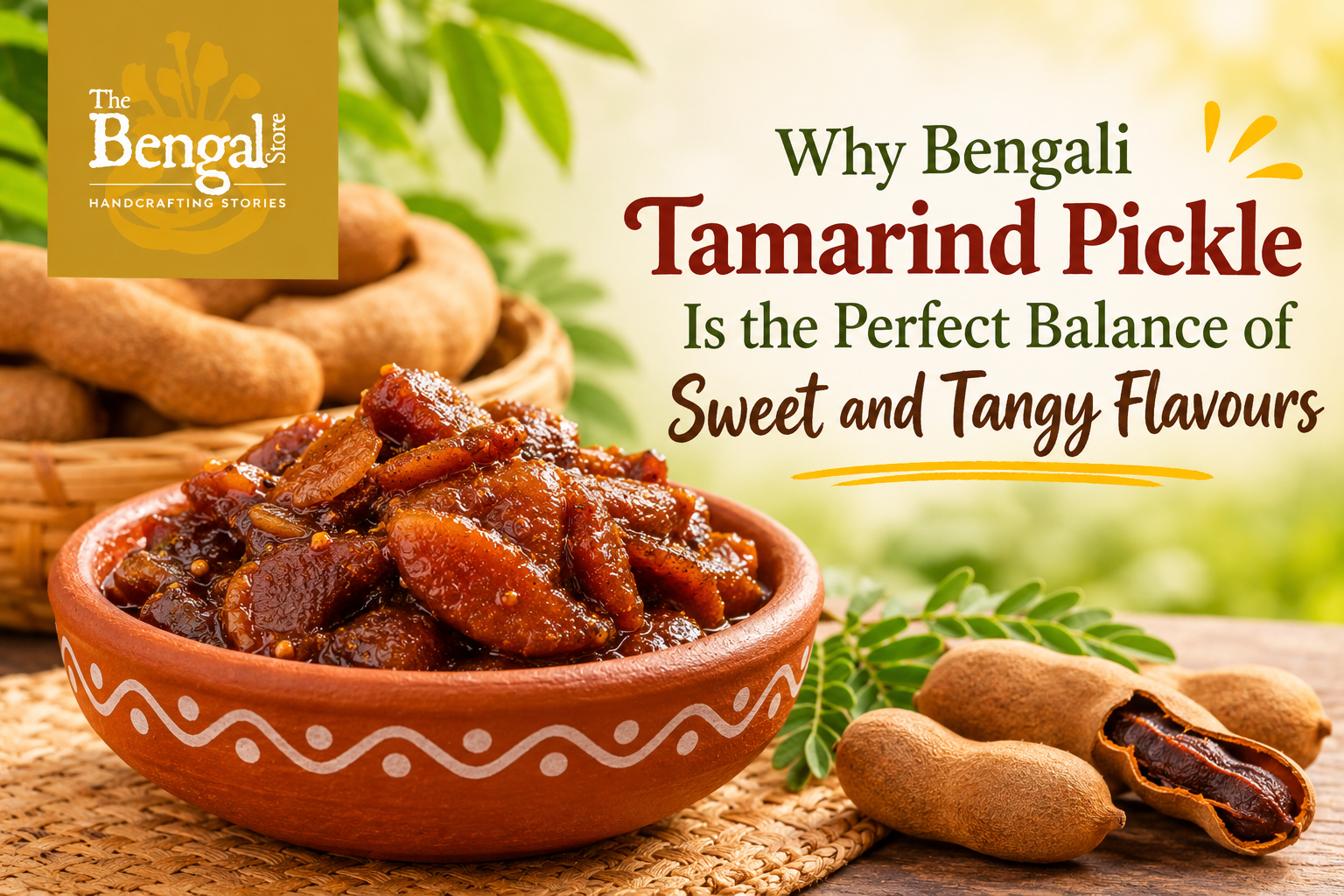
Bengali tamarind pickle, known in Bengali homes as tetul aachar, balances the sharp sourness of tamarind with the rounded sweetness of jaggery and the warmth of spices. It tastes tangy first, sweet next and gently spiced at the finish. That layered taste is why a single spoonful can lift a plain plate of rice and dal, a bowl of khichuri or an evening plate of fried snacks.
|
KEY TAKEAWAYS • Tamarind brings a sour, fruity tang; jaggery softens it with a deep, caramel-like sweetness. • Spices keep the sweetness from turning heavy and leave a gentle warmth. • Sweet-and-sour flavours have long had a place in Bengali meals, served beside the main dishes rather than in place of them. • Tetul aachar goes well with rice and dal, khichuri, parathas, luchi and fried snacks. • A small amount is enough: it is a flavour accent, not a side dish. |
What is Bengali tamarind pickle?
Bengali tamarind pickle is a sweet-and-sour aachar made from tamarind pulp, a sweetener and spices. In Bengali, tamarind is tetul (also written tentul), so you will see it called tetul aachar, tetuler achar or tentuler aachar. The spelling changes from family to family; the idea stays the same.
Many Indian pickles lean salty, oily or fiery. Tetul aachar sits on the sweet-sour side instead. It is closer in spirit to a chutney than to a hot mango or lime pickle, which is why people who usually avoid pickles often enjoy this one.
Why the sweet-and-tangy balance works
The tang: tamarind
Ripe tamarind is sour, but not in the sharp, clean way lemon is. Its sourness is fruity and slightly earthy, with a depth that reminds some people of dates or dried fruit. That depth is what gives the pickle its body.
The sweetness: jaggery
Jaggery, or gur, is unrefined sugar with a toffee-like, slightly smoky taste. Bengal has a long tradition of gur, from date palm nolen gur to the solid patali gur. In a tamarind pickle, jaggery does more than sweeten. It rounds off the sour edges and adds its own warm note, which plain white sugar cannot.
The warmth: spices
Spices tie the two together. They add aroma and a mild heat, so the pickle never tastes like a simple sweet. The spice blend varies by recipe and maker.
Why the contrast tastes so good
The sour note wakes up your taste buds, the sweet note softens the next bite, and the spice lingers. Placed next to simple, mild food such as rice, dal or puffed rice, that contrast stands out even more. This is the same reason a sweet-sour chutney feels so satisfying near the end of a Bengali meal.
Tetul aachar in Bengali food culture
Pickles are part of everyday life in Bengal. Many households still make them at home, and a row of jars on a kitchen shelf is a familiar sight. Traditional Bengali achar covers a wide range: kul (jujube), mango, jalpai (Indian olive), chalta (elephant apple) and, of course, tamarind.
Tetul aachar holds a special spot because so many people link it with childhood. Tamarind treats are often remembered as a favourite of schoolchildren, and a spoonful of tamarind pickle still brings back that memory for many adults. For Bengalis living away from home, a jar of Bengali pickle is also a quick way to bring back the taste of a home kitchen.
How to enjoy Bengali tamarind pickle
With everyday meals
The simplest way is the best: keep a small spoonful at the side of your plate with rice, dal and a vegetable dish. Take a little with a mouthful of rice when you want a change of taste. It also works with plain roti or paratha on days when the vegetables feel too mild.
With traditional Bengali dishes
Tamarind pickle is a natural partner for khichuri, especially with something fried on the side, like begun bhaja (fried aubergine). It also sits well with luchi and a mild potato dish, or alongside a simple plate of Gobindobhog rice and dal.
With snacks
Try a little with fried snacks such as singara, beguni, pakoras or chop. You can also stir a small amount into a bowl of muri (puffed rice) with chopped onion for a quick sweet-sour bite. If you prefer a dip, loosen a spoonful with a few drops of warm water.
|
Pairing |
Why it works |
|
Rice and dal |
Mild, comforting food lets the sweet-sour taste stand out |
|
Khichuri with fried vegetables |
The tang cuts through richness and oil |
|
Luchi or paratha |
Adds a bright contrast to bread and mild curries |
|
Singara, beguni or pakoras |
Works like a ready-made chutney for fried snacks |
|
Muri (puffed rice) |
Turns a plain snack into something more interesting |
Bengali tamarind pickle pairings at a glance.
What to look for in a good tamarind pickle
• A short, clear ingredient list. Tamarind and the sweetener should come first.
• Balance. It should be neither overly sweet nor harshly sour, and not too salty.
• Additives. If you prefer pickles without preservatives or artificial ingredients, check the label.
• Care. Always use a clean, dry spoon and follow the storage advice on the label.
The Bengal Store’s Tetul Aachar
If you would like to try a traditional tetul aachar at home, The Bengal Store’s Tetul Aachar brings together the tang of tamarind and the sweetness of jaggery with fresh, quality spices. According to the product page, it is made with freshly picked tamarind and is free of chemicals and preservatives. It comes in 200g and 500g jars.
The Bengal Store sources food and crafts from across the districts of Bengal and supports artisans across the state. If you are building a Bengal pantry, the Bengali food collection also includes kasundi, nolen and patali gur, Gobindobhog rice and bori.
Conclusion
Bengali tamarind pickle works because it does three things at once: tamarind brings the tang, jaggery brings a deep sweetness, and spices hold it all together. It is easy to serve, needs no cooking and turns simple food into something you look forward to. Keep a jar on the table, start with a small spoonful beside rice and dal, and find your own favourite pairing.
Ready to try it? Order The Bengal Store’s Tetul Aachar and enjoy it with your next meal.
6. Frequently asked questions
These questions and answers appear on the page and are also marked up for search engines (FAQPage schema).
What does Bengali tamarind pickle taste like?
It is tangy and sweet at the same time. The tamarind gives a fruity sourness, jaggery adds a deep, caramel-like sweetness, and spices give a mild warmth at the end.
What is the difference between tetul aachar and tamarind chutney?
Both are sweet and sour. A tamarind chutney is usually made fresh and eaten within a short time, while tetul aachar is a pickle made to be kept in a jar and served in small amounts over many meals.
What can you eat tetul aachar with?
It goes well with rice and dal, khichuri, luchi, roti or paratha, and fried snacks such as singara, beguni and pakoras. You can also mix a little into muri (puffed rice).
Is Bengali tamarind pickle spicy?
It is mainly sweet and sour, with a gentle warmth from the spices. How hot it tastes depends on the recipe, so check the label if you are sensitive to heat.
What is The Bengal Store’s Tetul Aachar made with?
The product page describes it as tamarind and jaggery combined with fresh, quality spices, and states it is free of chemicals and preservatives. Check the label for the full ingredient list.