Cart
0
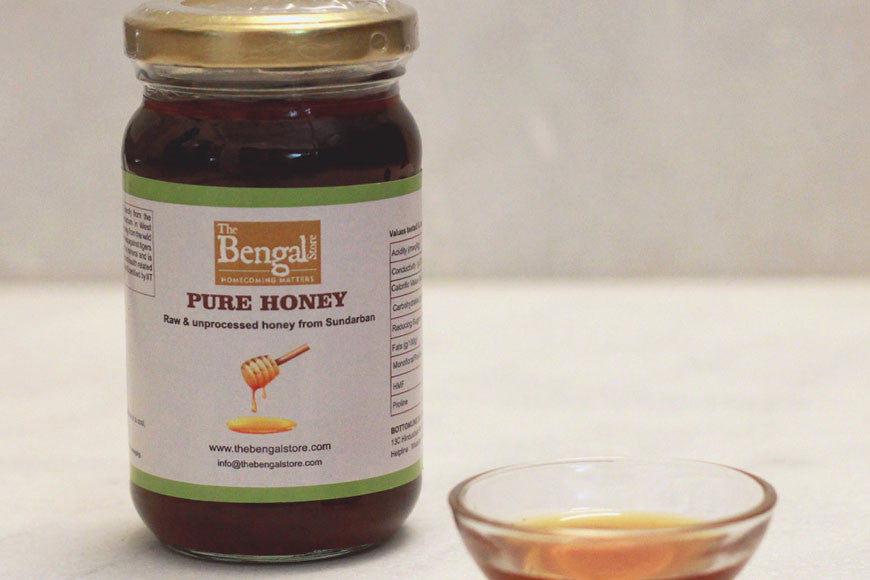
Quick answer: Honey collectors in the Sundarbans, called mauli in Bengali, gather wild honey in forests where man-eating tigers live. Raw honey is not filtered or pasteurised apart from a basic filtration. A few apiaries have also come up in the area.
Honey from the Sundarbans, and the story behind it
The life of a honey collector is not an easy one, particularly for those in the Sundarbans. The reason is easy enough to pinpoint – attacks by man-eating tigers. The Royal Bengal Tiger, pride and joy of the Sundarbans, is also the biggest threat to honey collectors in the region. Since the beginning of this year, of the several lives lost to tiger attacks, at least six were ‘mauli’ (the Bengali word for honey gatherer). This, despite the many prescribed methods designed to persuade tigers to leave humans alone.
What risks do honey collectors face?
Tanmoy Mandal, a former mauli who now coordinates the task of honey collecting by others of his tribe, says at least three of the deaths have occurred in the past couple of months, particularly among collectors who operate on their own, not necessarily with a government permit which, once issued, can be renewed for generations.
How are apiaries changing honey gathering?
In recent years, a few apiaries have come up in the area, to boost apiculture (the keeping of bees) and safer ways of gathering honey. Nonetheless, the raw honey that reaches The Bengal Store has a history of hardship and courage behind it.
This is quite apart from the innumerable health benefits of raw (as opposed to pasteurised or processed) honey. Raw honey comes straight from the beehive and contains bee pollen, propolis and antioxidants. Check the label and the source when buying honey described as pure.
How does raw honey differ from pasteurised honey?
What many may not know as readily is why raw honey is so good for you?
Well, the immediate answer is that raw honey is not filtered or pasteurised, though a basic filtration process does eliminate the larger impurities. Pasteurisation involves heating the honey, which kills yeast cells. This changes its taste, helps it last longer, and gives it the distinctive golden-brown appearance which most of us know. Pasteurisation can reduce some of the nutrients found in raw honey.
Honey has traditionally been used for minor wounds and coughs. It is not a medical treatment. It also contains beneficial minerals such as niacin, riboflavin, pantothenic acid, calcium, magnesium, manganese, potassium, phosphorous, and zinc.
What does a tablespoon of raw honey contain?
On an average, one tablespoon or 21 gm of raw honey contains 64 calories and 16 gm of sugar.A little over half of this sugar is fructose, which may not be beneficial for everybody. Raw honey and table sugar both add sugar to the diet, so either is best used in moderation.
Sources and further reading
Key terms
- Mauli
- The Bengali word for a honey gatherer.
- Apiculture
- The keeping of bees.
- Raw honey
- Honey that is not filtered or pasteurised, though a basic filtration removes the larger impurities.
- Pasteurisation
- A process of heating honey, which kills yeast cells.