Cart
0
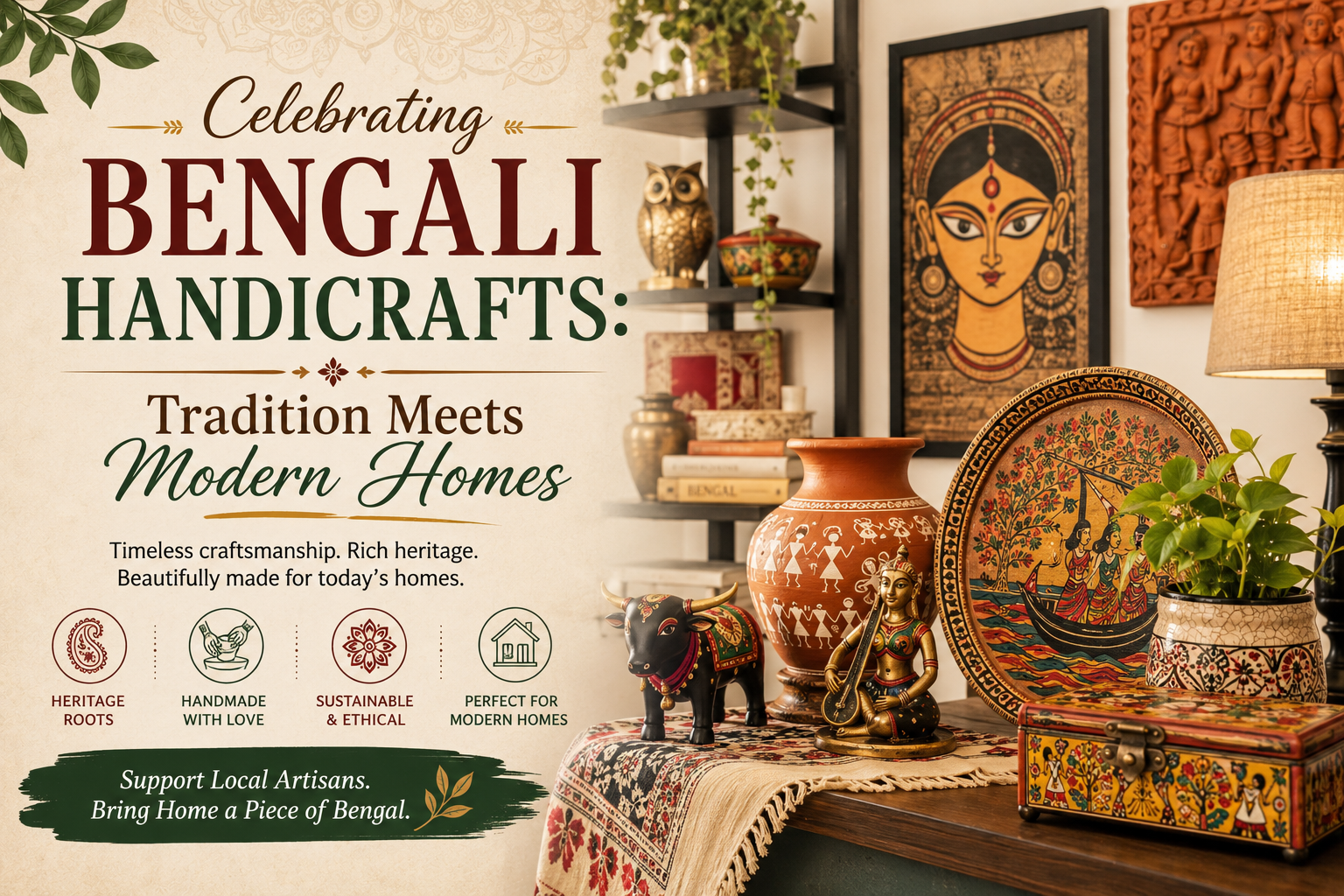
In many homes across Kolkata, there is often a handcrafted object that quietly becomes part of the space. A Bankura terracotta horse placed on a bookshelf, a woven Kantha textile folded over a chair, or a Dokra figurine resting on a work desk. These pieces may not be extravagant, yet they remain because they carry warmth, memory, and a sense of belonging.
That is the enduring beauty of Bengali handicrafts. They are not simply decorative objects, but pieces shaped by generations of artisans to be lived with and passed through everyday life. At The Bengal Store, these traditions continue to find relevance in modern homes through thoughtfully curated collections that bring together craftsmanship, culture, and contemporary living. In a world filled with mass-produced decor, authentic Bengal art and craft offer something far more meaningful: spaces that feel personal, layered, and deeply connected to heritage.
What Makes Bengali Handicrafts Different
India has a vast and diverse craft landscape. Every region carries its own traditions, materials, and techniques. What makes Bengali handicrafts especially distinctive is the extraordinary concentration of diverse craft traditions within a relatively connected cultural geography.
Across West Bengal’s 23 districts exists a remarkable range of artisan practices woven into a shared cultural identity. Dokra casting from Bankura. Terracotta from Bishnupur. Kantha embroidery from Nadia, Murshidabad, and the 24 Parganas. Tant weaving from Nadia and Hooghly. Jamdani, recognised by UNESCO, from the Dhaka tradition and its West Bengal weaving communities. Water hyacinth and Sabai grass weaving from Bengal’s wetland regions. Brass and bell metal work. Jute craft. Wood carving. Madur mat weaving from Medinipur.
These are not simply variations of one another. Each tradition carries its own materials, techniques, visual language, and artisan communities, yet all emerge from the same river-delta landscape and the same deeply rooted cultural heritage of Bengal.
How Bengali Craft Has Always Lived in Homes
The distinction between “art” and “everyday object” is largely a modern idea. In the communities where Bengali handicrafts evolved, craftsmanship was always closely woven into daily life. Families who commissioned terracotta work for temples also used terracotta lamps during festivals and rituals at home. Handwoven textiles, brassware, and natural fibre crafts were created not only for beauty, but for everyday living.
This is why a thoughtfully curated bengal craft store feels so relevant even today. These crafts were never designed only for display. They were made to be used, lived with, and passed through generations.
When you place a Dokra figurine on a shelf or introduce handwoven textiles into your home, you are not simply decorating a space. You are continuing a tradition that has always made homes feel warmer, more personal, and deeply connected to culture.
Room-by-Room Guide: Bengali Handicrafts at Home
Dining Area A handwoven Madur table runner changes the whole feeling of a dining table — it introduces natural material and hand-texture into a space that usually has none. A Ceramic Etched Plate-Jelly Fish as a centrepiece that doubles as a serving piece for fruit or bread.
Study or Work Corner A small Dokra figurine on a bookshelf. A Jamini Roy reproduction framed and hung at eye level. A jute or water hyacinth tray for organising stationery. These are subtle, but they make a desk feel like a considered space rather than just a functional one.
Kitchen Organic Bengali food products — Kul Aachar, ghee, orange jam in their original packaging — displayed on a kitchen shelf rather than hidden in a cupboard. A pure Kansa spoon in the utensil holder. A water hyacinth coaster under the fruit bowl.
Bedroom A Kantha quilt at the foot of the bed. A pure cotton stole in a natural dye colour that complements your bedding. A small terracotta lamp on the nightstand. The bedroom is where the most personal craft choices tend to land — and Bengal's handloom and embroidery traditions give you a lot to work with.
The Bengal Craft Store Behind This Vision
The Bengal Store brings together the richness of Bengal’s artistic heritage through a thoughtfully curated collection of crafts, textiles, lifestyle products, organic food, and cultural finds sourced from across the state. More than just a retail space, it presents authentic Bengal art and craft in a way that feels relevant to modern living while preserving the cultural depth behind every piece. Through both its physical store and online platform, The Bengal Store continues to connect Bengal’s artisan traditions with people who value meaningful craftsmanship, timeless design, and objects that carry a genuine sense of story and identity.
Why Supporting Bengali Handicrafts Matters
Choosing handmade products is about far more than aesthetics. Behind every handcrafted piece is an artisan community whose livelihood, skill, and cultural heritage depend on the continued relevance of these traditions. When people support an authentic bengal craft store, they help sustain generations of craftsmanship that have been shaped over decades and passed down through families. Traditional art forms survive only when artisans are able to continue practising them with dignity and meaningful economic support. Supporting Bengali craftsmanship is not simply about preserving heritage for nostalgia. It is about valuing human skill, cultural identity, and thoughtfully made objects that carry stories, authenticity, and a lasting connection to Bengal’s artistic traditions.
Frequently Asked Questions
Do Bengali handicrafts suit modern apartments?
Yes — particularly when chosen selectively. Natural materials like terracotta, woven grass, and hand-dyed cotton add warmth and texture to neutral modern interiors in ways that manufactured decor cannot.
What is Kantha embroidery?
A running-stitch embroidery tradition from West Bengal, traditionally worked on layers of old cotton using threads pulled from sari borders. The motifs — fish, lotus, birds, the tree of life — come from Bengali folk traditions. Kantha textiles are among the most distinctive and accessible of Bengali handicrafts.
What is Dokra art?
A lost-wax brass casting technique practised in the Bankura district. Each piece is unique because the wax mould is destroyed in the casting process. Dokra figurines and decorative items are among the most collectable Bengali handicrafts.
Where can I buy authentic Bengali handicrafts in Kolkata?
The Bengal Store at Jodhpur Park (open Mon–Sat, 11 AM–6PM) is one of the most carefully curated options in South Kolkata. The online store at thebengalstore.com ships across India and internationally.
What makes The Bengal Store different from other craft stores?
It sources exclusively from West Bengal's artisan communities across all 23 districts, carries Bengali literature and organic food alongside crafts, and presents everything with the cultural context behind it — not just the object, but the making.
Conclusion
Over time, handcrafted pieces stop feeling like purchases and begin to feel like a natural part of the home itself. A terracotta figure placed on a shelf years ago, a handwoven textile that still remains despite everyday use, or a handcrafted accent that quietly moves with you from one space to another. That is the enduring beauty of authentic Bengal art and craft. These objects carry warmth, memory, and a sense of permanence that mass-produced decor rarely achieves. The Bengal Store exists to help more of these meaningful pieces find homes where they are not simply displayed, but genuinely lived with. Explore The Bengal Store and discover handcrafted creations that bring Bengal’s artistic traditions into modern living with authenticity, character, and timeless appeal.