Cart
0
Introduction
There's something magical about the smell of mangoes simmering in sugar syrup on a slow afternoon. If you grew up in a Bengali household, you probably remember a jar of aam murabba sitting quietly in the kitchen, waiting to be spooned out after lunch. That taste — tangy, sweet, and slightly spiced — is hard to forget.
Today, more people want to buy Aam Murabba online instead of making it at home, simply because life is busier. But here's the catch: not all murabba is created equal. Most store-bought jars are mass-produced, loaded with preservatives, and miles away from the authentic taste your grandmother made. In this article, we'll explore why homemade Aam Murabba beats commercial alternatives, and where you can buy Aam Murabba online in Kolkata without compromising on quality.
What Makes Homemade Aam Murabba Special?
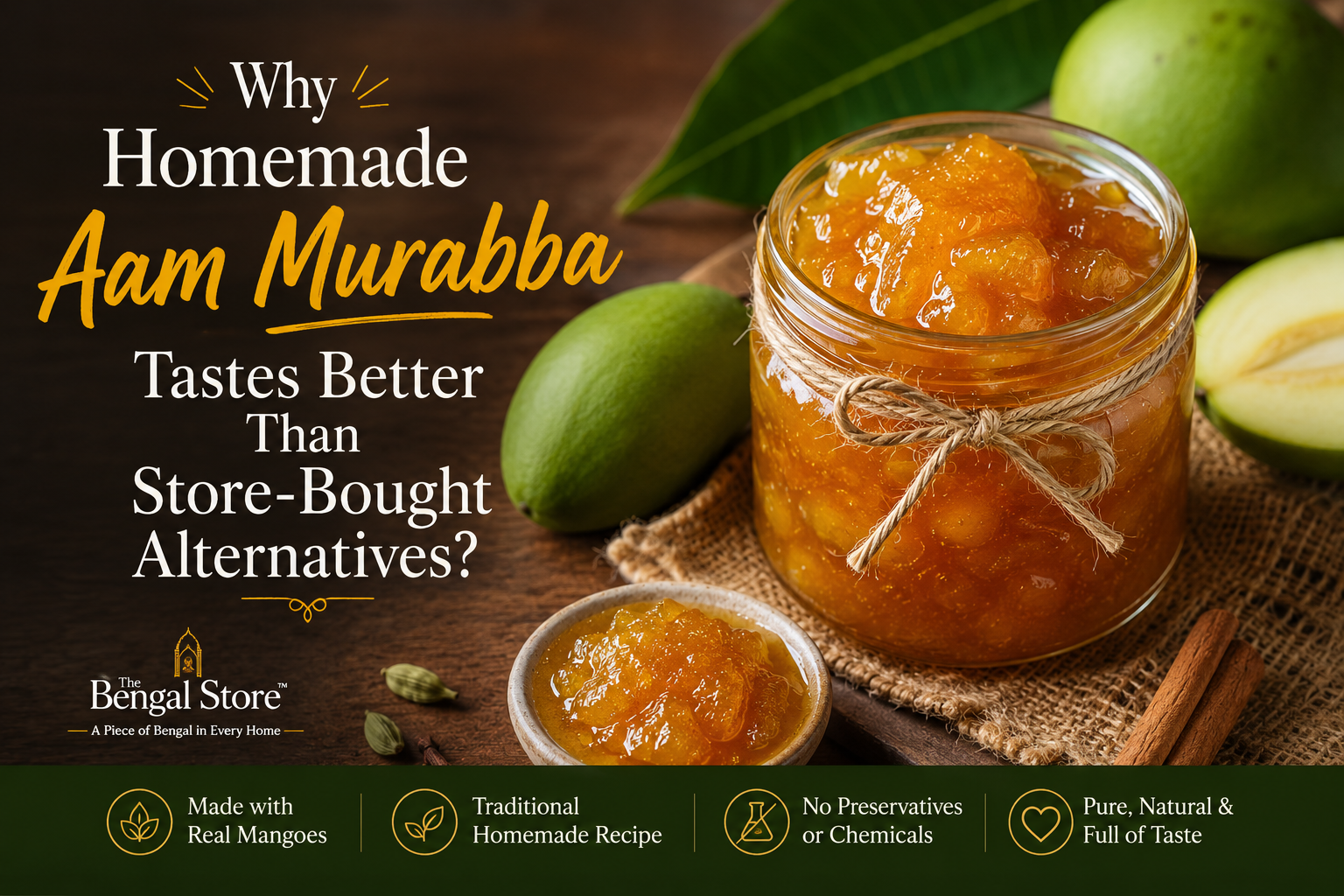
Homemade Aam Murabba isn't just a sweet mango preserve — it's a slow, patient process passed down through generations. Every step, from selecting raw mangoes to the final simmer, is done with care rather than speed.
It's Made With Intention, Not Mass Production
When murabba is prepared at home or in small batches, each mango is checked for ripeness, texture, and firmness. Factories don't have time for that kind of attention; they process in bulk, which often means uneven quality.
The Flavour Is Balanced, Not Artificial
Homemade murabba relies on natural sweetness balanced with cardamom, saffron, or fennel — not artificial flavouring agents. That's why it tastes rounder and more layered on the palate.
Homemade vs Store-Bought Aam Murabba
Let's be honest — convenience matters, but so does what you're actually eating.
Store-bought murabba, especially the cheaper commercial versions, often use:
-
Refined sugar syrup with added preservatives
-
Artificial colouring to make mangoes look "fresh"
-
Chemical stabilisers to extend shelf life for years
Homemade versions, on the other hand, focus on:
-
Naturally sun-ripened or tart raw mangoes
-
Slow-cooked sugar syrup that thickens on its own
-
Whole spices like fennel, cardamom, and saffron for aroma
The difference isn't just about taste — it's about trust. When you buy homemade and authentic mango murabba, you know exactly what's going into the jar.
Ingredients That Make the Difference
Good murabba starts long before the cooking pot comes out. It starts at the market.
Choosing the Right Mangoes
Raw, firm, and slightly sour mangoes work best. Overripe mangoes turn mushy during cooking and don't hold their shape, which is a common issue with lower-quality commercial batches.
The Role of Spices
Traditional Bengali murabba recipes use a handful of whole spices — fennel seeds, cardamom pods, and sometimes a pinch of saffron. These aren't just for flavour; they also help with digestion, which is part of why murabba has been a post-meal staple for so long.
Sugar and Syrup Consistency
The syrup needs time to reach the right consistency naturally. Rushed commercial production often uses corn syrup or glucose syrup instead of allowing sugar to develop its own thickness through slow cooking.
Health Benefits of Homemade Mango Murabba
Aam Murabba isn't just a treat for your taste buds — it comes with genuine wellness benefits when made the traditional way.
-
Aids digestion: Raw mangoes and fennel together support healthy digestion after meals.
-
Rich in Vitamin C: Mangoes retain more of their natural vitamin content when not overly processed.
-
Cooling effect on the body: In Bengali households, murabba is often eaten to beat the summer heat.
-
No hidden preservatives: Homemade batches skip the chemical preservatives found in many packaged versions.
Because of this, homemade murabba fits naturally into a mindful, everyday diet — something that's harder to say about heavily processed alternatives.
Traditional Bengali Preparation Methods
Bengali kitchens have their own rhythm when it comes to preserves. Aam Murabba here isn't rushed — it's cooked over low flame, often in small batches, and left to rest so the mangoes absorb the syrup slowly over days.
This slow-preparation method is similar to how Traditional Bengali Pickles are made — with patience, sunlight, and time doing most of the work rather than machines. It's this same philosophy that runs through Homemade Bengali Sweets and preserves across the region, where taste is built layer by layer instead of manufactured overnight.
Why Quality Ingredients Matter
You can't shortcut good murabba. The mangoes need to be right, the sugar needs to cook slowly, and the spices need to be fresh — not stored for months in a warehouse.
This is exactly why so many people are moving away from supermarket jars and looking to buy homemade and authentic mango murabba from trusted small producers instead. Quality ingredients aren't just a marketing phrase — they directly affect taste, texture, and how the murabba makes you feel after eating it.
The same principle applies across other traditional preserves too, including Nolen Gur Products, where the source of the raw ingredient decides the entire flavour profile.
Where to Buy Authentic Homemade Aam Murabba Online
If you're in Kolkata or anywhere else in India and craving that real, old-fashioned taste, you don't need to wait for a family member to make a batch anymore.
The Bengal Store brings traditional Bengali recipes straight to your doorstep, prepared the way they always have been — slow-cooked, minimally processed, and free from artificial additives. Whether you want to buy Aam Murabba online in Kolkata or have it shipped elsewhere in India, the process stays rooted in authenticity.
Along with murabba, you'll also find a wider range of Authentic Bengali Food Products, so you can recreate that nostalgic, homemade taste across your entire kitchen — not just in one jar.
If you enjoy reading about the stories and traditions behind these recipes, The Bengal Store Blog covers more on Bengal's culinary heritage worth exploring.
Conclusion
Homemade Aam Murabba isn't just about taste — it's about tradition, trust, and the care that goes into every jar. While store-bought versions offer convenience, they rarely match the depth of flavour, the health benefits, or the authenticity that comes from a slow, traditional process.
If you've been searching for a way to buy Aam Murabba online without settling for mass-produced alternatives, it's time to choose homemade. Order from The Bengal Store today and taste the difference tradition makes — one spoonful at a time.
FAQs
1. Is homemade Aam Murabba healthier than store-bought versions?
Yes. Homemade murabba avoids artificial preservatives and colouring, relying instead on natural sugar, mangoes, and spices, which makes it a healthier choice overall.
2. How long does homemade mango murabba last?
When stored properly in a clean, airtight jar and kept away from moisture, homemade Aam Murabba can last for several months without needing artificial preservatives.
3. Where can I buy homemade Aam Murabba online in Kolkata?
You can buy Aam Murabba online in Kolkata directly through The Bengal Store, which delivers traditionally prepared murabba across the city and beyond.
4. Is Bengali-style Aam Murabba different from other regional versions?
Yes. Bengali-style murabba typically uses a distinct spice balance, including fennel and cardamom, along with a slow-cooking method that gives it a unique texture and aroma.
5. Can Aam Murabba be eaten daily?
In moderate portions, murabba can be enjoyed regularly, especially after meals, as it's traditionally believed to support digestion.
6. What's the difference between Aam Murabba and mango pickle?
Murabba is sweet and syrup-based, while mango pickle is typically spicier and oil-based. Both are traditional preserves, but they serve different culinary purposes.
7. Does The Bengal Store use preservatives in its Aam Murabba?
No. The Bengal Store focuses on traditional, homemade preparation methods, avoiding artificial preservatives to keep the murabba as authentic as possible.